
Three months into 2025 and a few things are clear: Resources are scarce, healthcare is at a crossroads, and it’s going to take all of us to do something about it.
There’s no better case study than the ballooning costs to maintain the state of Delaware’s group health insurance plan. Just last year, the State Employee Benefits Committee (SEBC) voted to increase premium rates by 27%, and health plan costs continue to add multi-million dollars to the state’s budget.
We submitted public comment to a recent SEBC meeting to call for collaborative solutions that address the key drivers of rising healthcare costs and also focus on improving health outcomes. Time is of the essence. Let’s first breakdown the drivers and challenges that face us.
As leaders in the health field, we know healthcare – especially healthcare finance – is complex and there are many drivers that impact the cost of care. As an example, SEBC consultants have consistently pointed out that the state health plan’s rising cost trends have been driven by increasing costs on the pharmaceutical side, in large part due to increasing utilization of GLP-1 drugs. The state health plan paid over $12 million more in GLP-1 utilization for weight loss in FY24 than expected and utilization of these medications is expected to increase 148% in FY25 according to SEBC consultants.
Additionally, like the rest of our state, the state health plan population has higher rates of disease and conditions that contribute to higher health costs. For example, Delaware’s state plan has 41.8% more cases of osteoarthritis than other states and 19.2% more cases of diabetes.
These are trends Delaware is experiencing, but they are not happening in a vacuum. National experts are projecting that healthcare costs will increase nationally as much as 9% in 2025 – these are overall healthcare costs not just hospital costs. These cost estimates are driven by a variety of factors: Inflationary pressure, pharmaceutical/prescription drug spending, and behavioral health utilization. Hospitals are doing our part to address affordability by investing in prevention, access and quality care. Our hospitals invest significantly in primary care and behavioral health to help keep people healthier and prevent costly hospital visits; in fact, Delaware hospitals lose more than $70 million annually in supporting primary care in the state due to inadequate insurance reimbursement.
Our hospital members also participate in value-based care arrangements that focus on improving health outcomes. Most recently, it was announced that ChristianaCare’s Delaware Medicaid Partners Accountable Care Organization (ACO) has reduced health care spending by $6.2 million in 2023 while improving care for nearly 30,000 Medicaid beneficiaries in Delaware. Additionally, Nemours Children’s Health and the state of Delaware recently announced the first-ever pediatric global revenue budget model that aligns the financial incentives that pay for healthcare with Nemours’ aim to keep children healthy.
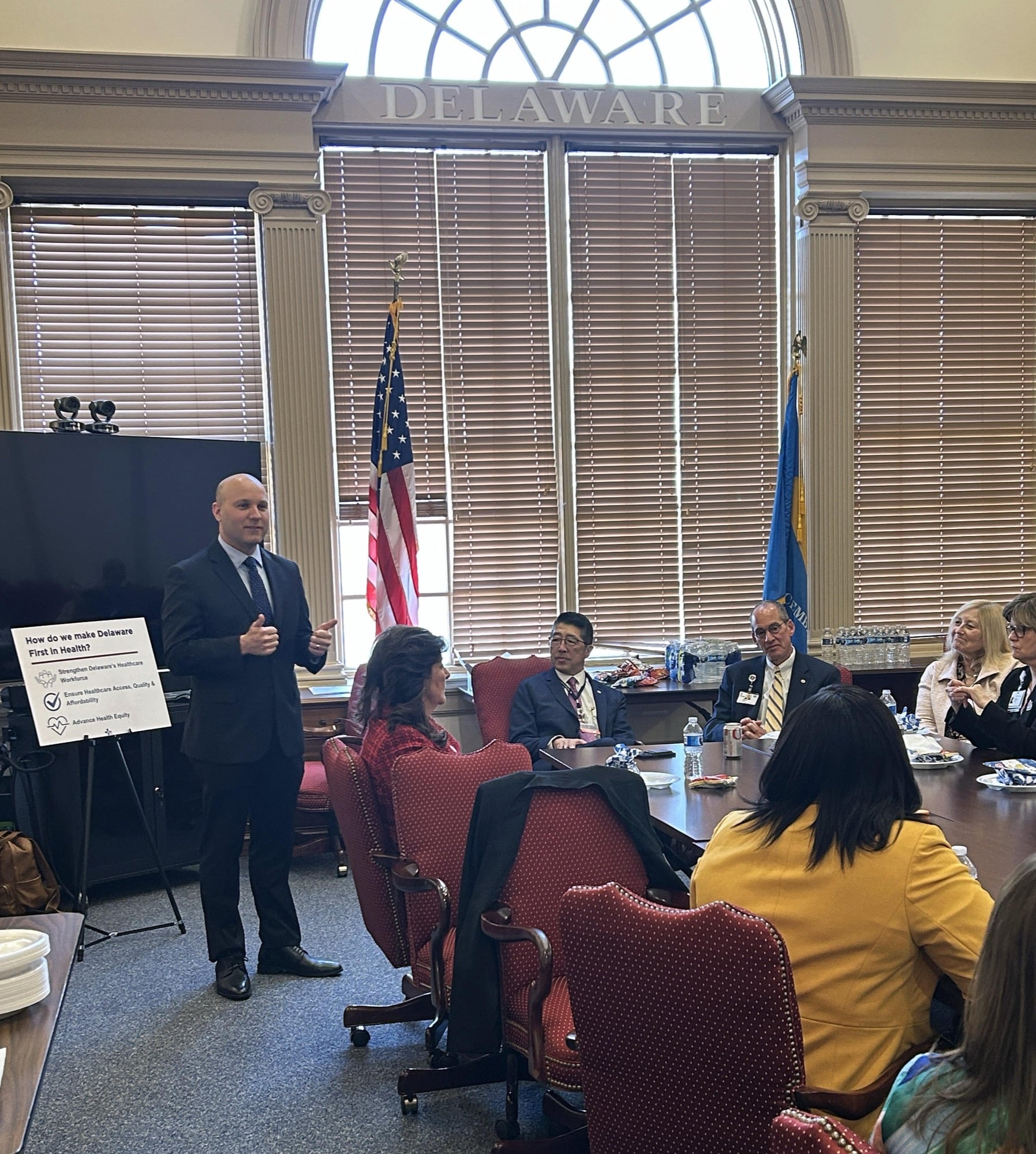
Delaware is currently ranked #2 best in the nation for hospital quality and we want to keep our top ranking. We can build on this progress by focusing on solutions that address healthcare affordability and improve health outcomes for the state health plan and beyond. It’s going to take all of us to make the First State first in health. That’s why we’re calling for hospitals to have a seat at the table to help further collaborative approaches involving all sectors of the healthcare system. We’re ready to get to work!